US space agency NASA has completed 60 years of human space exploration, discovering the world beyond Earth and developing new technologies.
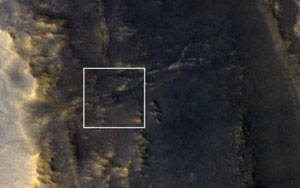
A NASA Mars orbiter has spotted the agency's Opportunity rover on the Red Planet for the first time since it went into hibernation after a dust storm swept over the region a little more than 100 days ago and blocked sunlight from reaching the rover.
England sticking with Key, McCullum and Stokes despite Ashes humbling
Goa Forward Party likely to contest 25 assembly seats in 2027, looks to strengthen voter base
West Asia crisis: EAM Jaishankar speaks to US Secretary of State Rubio
IndiGo appoints former AI Express MD Aloke Singh as Chief Strategy Officer
India confronts challenges head-on, leaves no stone unturned for its development: PM Modi
AAP leader says police booked him for protest for Wangchuk
Karnataka govt tables Rs 14,767 cr supplementary estimates in assembly
Mangaluru man held for sharing AI-manipulated video to incite communal disharmony
‘Are you operating out of BJP’s office?’: ECI’s official letter with BJP seal goes viral, sparks row
Hearing in defamation case against Rahul Gandhi postponed till March 27
Rupee breaches 94-level against US dollar intraday; ends flat
TN court holds 9 policemen guilty in case of custodial torture leading to deaths of father-son
Ramakrishna Electro Component Pvt Ltd Group (REC), an India-based semiconductor distribution company, on Friday launched a Vehicle Tracking System (VTS), the first of its kind module that will primarily use an Indian satellite for navigation.
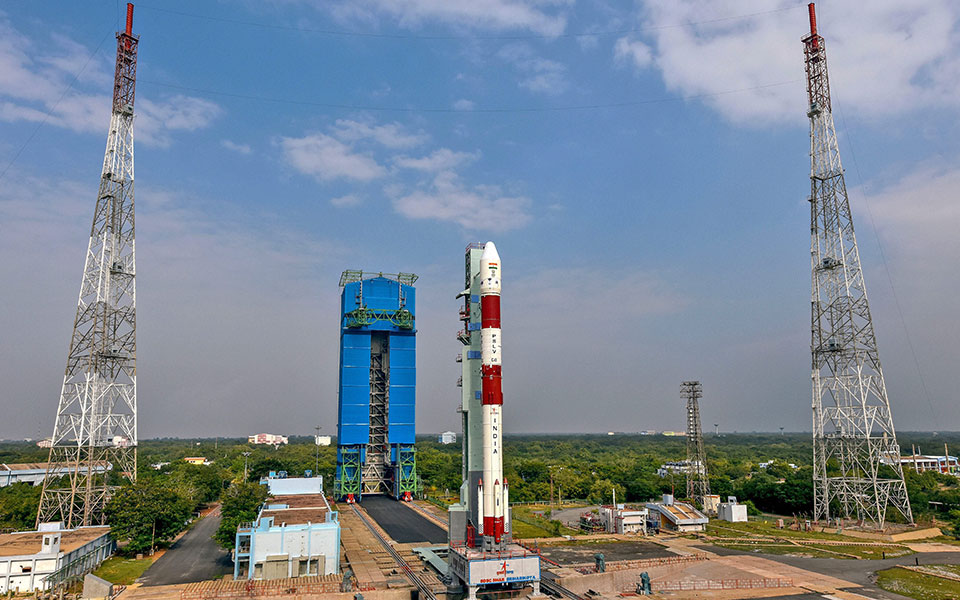
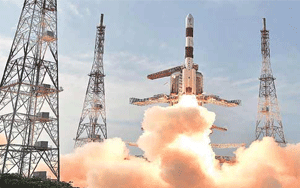
Indian rocket Polar Satellite Launch Vehicle (PSLV) lifted off successfully with two British satellites NovaSAR and S1-4 from the rocket port here on Sunday night.
The countdown for the Indian rocket Polar Satellite Launch Vehicle's (PSLV) lift-off on Sunday began on Saturday at the rocket port in Sriharikota in Andhra Pradesh, the Indian space agency said.
In a bid to understand Earth's ice sheets, glaciers, sea ice, snow cover and permafrost, NASA on Saturday successfully launched its Ice, Cloud and Land Elevation Satellite-2, or ICESat-2.
The Indian space agency expects to fly its first small rocket with a carrying capacity of about 500-700 kg sometime next year, according to a top official.
A sea turtle has a 22 per cent chance of dying if it eats just one piece of plastic, an Australian scientific institution revealed on Friday, quantifying for the first time the risk that plastic pollution poses to sea turtle populations.
Indian rocket Polar Satellite Launch Vehicle (PSLV) will put into orbit on Sunday two foreign satellites - NovaSAR and S1-4 - together weighing 889 kg, said a top official.
In a breakthrough move, British scientists have used natural sunlight to convert water into hydrogen and oxygen by mixing biological components and man-made technologies.